Great coaching has always been about relationships. But in today’s gyms, relationships alone are not enough to sustain long-term engagement and retention. The most successful gyms are combining coaching expertise with gym performance tracking to better understand their members, spot trends early, and create stronger communities.
This shift toward data-driven and AI fitness coaching is not about replacing intuition. It is about giving coaches better visibility so they can act with confidence and consistency.
What “data-driven coaching” means in a gym setting
Data-driven coaching is about using simple, actionable insights to guide everyday decisions. It helps coaches move from reactive to proactive, without adding complexity to their workflow. Instead of relying only on memory or intuition, coaches can use data to consistently deliver better experiences across every class and athlete.
1. Beyond PRs: attendance, consistency, effort, engagement
Tracking only personal records gives an incomplete picture. Coaches need visibility into:
- How often members show up
- How consistently they train
- How they scale workouts
- How they engage with the community
This is where member performance analytics becomes valuable.
2. Individual vs. community-level insights
Good coaches understand individuals. Great gyms also understand patterns across their entire community.
- Individual data helps personalize coaching
- Community data helps improve programming and engagement
5 types of data that actually matter
Not all data drives outcomes. The key is focusing on signals that influence behavior, consistency, and long-term engagement. Gyms that prioritize the right metrics often see stronger retention because they can act early and consistently.
1. Attendance trends
Consistent attendance is widely recognized as one of the strongest indicators of long-term member retention.
2. Workout performance (not just max lifts)
Progress includes consistency, effort, and incremental improvements over time, not just peak numbers.
3. Effort and scaling patterns
Scaling decisions often reveal how athletes are feeling, adapting, and progressing.
4. Goal tracking
Clear goals increase motivation and give members a reason to stay engaged beyond daily workouts.
5. Community engagement (comments, fist bumps, etc.)
Engagement signals show who feels connected and who might be drifting away. These are critical inputs for effective gym community building strategies.
10 fitness progress metrics that gym owners should help athletes track in SugarWOD
How top gyms turn data into community

Data becomes powerful when it is used to create connection, not just track performance. The best gyms use insights to build relationships and shared experiences. They turn numbers into conversations, recognition, and moments that members remember.
1. Spotting disengaged members early
A drop in attendance or engagement is often the first warning sign. Early outreach can prevent cancellations.
2. Celebrating milestones publicly
Recognition builds motivation and reinforces a sense of belonging within the gym.
3. Creating shared challenges
Community-driven challenges increase participation and strengthen group identity.
4. Coaching conversations backed by insight
When coaches reference real data, conversations feel more personal and impactful.
Why data builds retention (not just performance)
Retention is driven by how members feel, not just what they achieve. Data helps coaches create experiences that feel personalized and consistent. When members see progress and feel supported, they are more likely to stay long term.
1. Members feel seen
Personalized insights show members that their effort is noticed.
2. Coaches act proactively
Instead of waiting for churn, coaches can intervene early.
3. Progress becomes visible
Clear progress tracking reinforces commitment and motivation.
Common mistakes to avoid
Even with the right tools, execution matters. Many gyms collect data but fail to use it effectively. Avoiding these mistakes ensures that tracking translates into real outcomes.
1. Tracking too much, using none
Too many metrics can create confusion instead of clarity.
2. Over-indexing on elite athletes
Most members are not competitors. Focus should remain on the broader community.
3. Ignoring qualitative signals
Conversations and coach intuition still play a critical role alongside data.
How SugarWOD helps CrossFit Fort Worth East build stronger member engagement
How SugarWOD makes data actionable for coaches
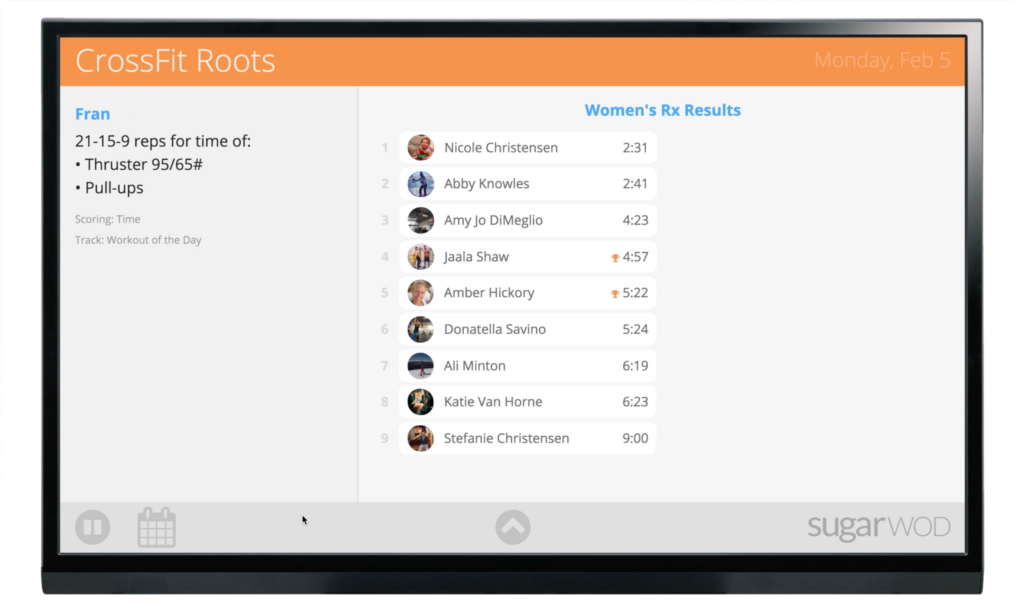
The goal of gym performance tracking is to simplify decision-making, not complicate it. SugarWOD helps coaches focus on what matters most. It connects performance tracking with daily engagement, making it easier to build habits and relationships.
1. Simple tracking leads to visible progress
Athletes can easily track workouts and results, making progress tangible.
2. Shared experience strengthens community
Features like comments and fist bumps create consistent interaction.
3. Built-in engagement loops
Coaches can maintain daily touchpoints without adding extra work.
Ready to coach smarter and grow your community?
Start your free trial with SugarWOD to simplify gym performance tracking, boost engagement, and give your athletes better visibility into their progress. Also, explore the SugarWOD Marketplace to extend your setup with powerful integrations that streamline operations and enhance the athlete experience.
FAQs about gym performance tracking
1. What is gym performance tracking?
Gym performance tracking is the process of monitoring attendance, workout results, engagement, and progress to improve coaching decisions and member outcomes.
2. How does performance tracking improve retention?
It helps coaches identify disengaged members early, personalize outreach, and keep members motivated through visible progress.
3. What metrics matter most in gym performance tracking?
Attendance, consistency, workout performance, engagement, and goal progress are the most impactful metrics.
4. Can performance tracking help build community?
Yes. When used correctly, it enables recognition, shared challenges, and stronger relationships between members and coaches.
5. How does SugarWOD support data-driven coaching?
SugarWOD simplifies tracking, surfaces actionable insights, and creates engagement loops that help coaches connect with members consistently.