Pull-ups are a milestone in CrossFit. They represent strength, coordination, and confidence. They are also one of the most common places where athletes stall, get frustrated, or end up with sore shoulders and torn hands.
Clear pull-up progressions in CrossFit give newer athletes a safe path forward while helping advanced athletes refine efficiency. For gym owners, this structure reduces avoidable injuries, builds athlete confidence, and keeps members engaged during long skill plateaus. When coaches provide clarity and visibility, progress feels achievable instead of intimidating, which directly supports retention.
This framework gives your coaching team a step-by-step model to apply in class, supported by best practices and simple ways to track wins inside SugarWOD.
Why pull-up progressions matter for retention
Visible progress keeps members coming back. Research in sport psychology consistently shows that clear, measurable goals improve motivation, focus, and persistence (Source: Taylor and Francis, 2022). This is especially true for skills like pull-ups, where progress can feel slow without structure.
For beginners, small wins like longer hangs or slower negatives build belief. For experienced athletes, refining mechanics improves efficiency and reduces wear on the shoulders and hands.
Poorly sequenced pull-up progressions in CrossFit often lead to frustration or injury. Moving athletes into kipping before they have strict strength and shoulder control increases risk and stalls long-term development. Clear progressions protect athletes and reinforce trust in your coaching.
The four-phase pull-up progression model
Before advancing athletes in CrossFit, ensure they can maintain hollow and arch positions with active shoulders. Many experienced coaches emphasize strict strength first, then traditional kipping, and only later butterfly for athletes who need speed and efficiency. This four-phase model prioritizes strict strength, then skill timing, before efficiency and speed.
Phase 1: Foundational strength on rings and bar
This phase builds scapular control and vertical pulling strength. It is where confidence and durability are developed.
Focus on quality before volume. Increase time under tension before adding reps.
Common tools:
- Tempo ring rows
- Active and dead hangs
- Scap pull-ups
- Eccentric or negative pull-ups
These movements help bridge the gap to a first strict pull-up.
Phase 2: Assisted pull-ups with intention
Bands and jumping reps are useful bridges when coached carefully. The goal is full range of motion, controlled positions, and consistent hollow and arch shapes.
Bands should reduce just enough load to allow clean reps. Jumping chin-over-bar reps help athletes practice the top position when they are close to strict pull-ups.
Scaled variations like jumping chest-to-bar appear in official programming, reinforcing that these are valid steps, not shortcuts.
Phase 3: Kipping mastery through timing and control
Kipping is a skill, not a shortcut. Athletes should show clear hollow-to-arch rhythm and lat engagement before adding speed.
Cue athletes to push away from the bar at the top and keep shoulders active through the cycle. Research comparing strict, kipping, and butterfly pull-ups highlights distinct mechanics, reinforcing the need to coach each variation intentionally.
Phase 4: Butterfly and advanced efficiency
Butterfly pull-ups are a race skill for experienced athletes with strong strict capacity and clean kipping mechanics. This phase is about efficiency, not ego. Keep doses small and intentional.
Program butterfly only when athletes demonstrate consistent control in earlier phases. Some athletes may not progress to butterfly or may choose not to implement it to their workouts as it can be advanced for some levels.
Coaching cues that prevent common mistakes

A few consistent cues go a long way in protecting shoulders and hands.
Grip and shoulder position
Encourage a thumb-around grip for control, externally rotated shoulders at the bottom, and elbows tracking toward the ribs. Break large sets early to preserve positions and reduce grip fatigue.
Drills that reinforce good mechanics
- Beat swings with pauses
- Active to passive hang repeats
- Tempo ring rows (3-1-X-1)
- Eccentric ladders
- Push-away drills at the top
Layer these into warm-ups and EMOM skill blocks so quality comes before intensity.
Smart hand care for consistent training
As athletes progress to kipping and butterfly pull-ups, friction volume increases. Proactive hand care helps athletes train consistently.
Preventing rips
- Keep calluses level with surrounding skin
- File after showers
- Moisturize regularly
- Use well-fitting grips during high-rep bar work
When a tear happens
Clean and cover the area, modify training for three to five days, and use simple tape wraps if needed. Smart management keeps athletes engaged while healing.
Using SugarWOD to track pull-up progressions
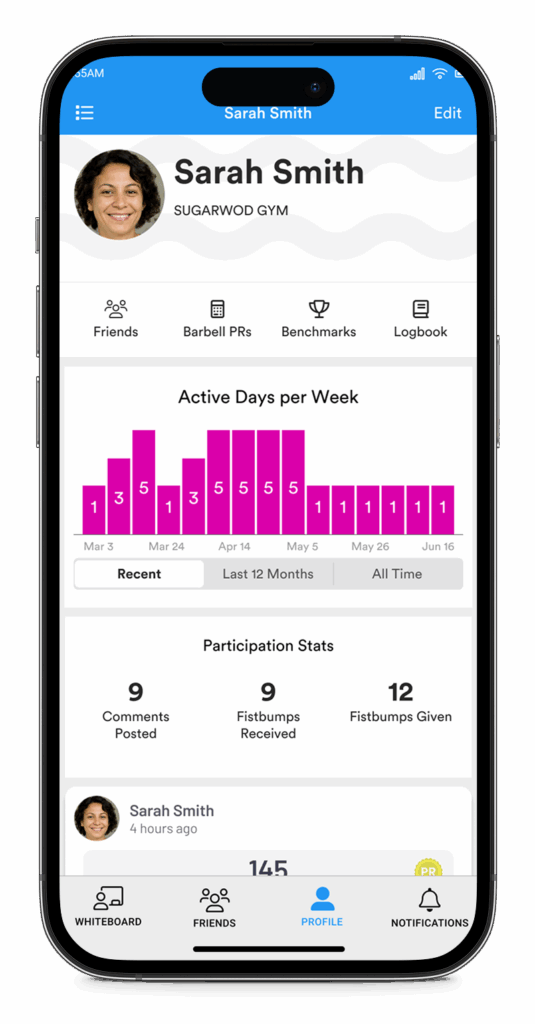
Progress sticks when athletes can see it. SugarWOD makes pull-up progressions in CrossFit visible and motivating.
- Log skill sessions and notes: Have athletes record hangs, ring rows, negatives, band color, and tempos. Notes and PR tracking highlight micro-wins that would otherwise be forgotten.
- Highlight milestones publicly: Whiteboards, comments, and high-fives create accountability and recognition. Celebrate first strict reps and longer unbroken sets.
- Use coach tools to guide progress: Review trends with SugarWOD to identify athletes ready to progress or those who need more strength work.
Why patient progressions build stronger communities
Great pull-up coaching is patient, progressive, and personal. Start with strict strength and scapular control. Layer in kipping once mechanics are solid. Introduce butterfly only when positions stay crisp under fatigue.
When athletes open SugarWOD and see last month’s negatives, today’s first strict rep, and an upcoming benchmark retest, momentum builds. That momentum drives retention and a culture that celebrates safe progress together.
Ready to coach pull-up progressions more clearly and consistently?
SugarWOD helps you organize skill work, log progress, and keep athletes engaged using dedicated Tracks, coach notes, and shared Whiteboards.
Start a free trial and see how SugarWOD helps your athletes move from rings to rig with confidence.
You can also explore structured strength and gymnastics programs in the SugarWOD marketplace to support long-term progression planning.